When selecting a laser beam profiler, there are several basic questions to be answered:
Wavelength(s) Do I need a broad wavelength range system or a limited spectrum?
Beam Diameter Is my beam small (a few microns) or is it larger, in the mm range?
Power/Energy Am I dealing with µW/µJ, mW/mJ, or higher? Do I need attenuation/sampling?
Accuracy What measurement accuracy do I need?
CW or Pulsed or beam Do I have a CW (continuous) output or a pulsed beam? If pulsed what PRR?
Next, what measurements are needed?
Beam Diameter(s)?
Beam XY Position, Wander?
Beam XYZ Focus Position?
Beam Divergence, Pointing?
Beam Shape (Gaussian, TopHat, Line Projection)?
Beam Quality (e.g. M2 Propagation Parameter, Uniformity)?
The answer to these questions will help narrow the selection of profilers that will best measure your beam.
When selecting a laser beam profiler, there are several basic questions to be answered:
Wavelength(s) Do I need a broad wavelength range system or a limited spectrum?
Beam Diameter Is my beam small (a few microns) or is it larger, in the mm range?
Power/Energy Am I dealing with µW/µJ, mW/mJ, or higher? Do I need attenuation/sampling?
Accuracy What measurement accuracy do I need?
CW or Pulsed or beam Do I have a CW (continuous) output or a pulsed beam? If pulsed what PRR?
Next, what measurements are needed?
Beam Diameter(s)?
Beam XY Position, Wander?
Beam XYZ Focus Position?
Beam Divergence, Pointing?
Beam Shape (Gaussian, TopHat, Line Projection)?
Beam Quality (e.g. M2 Propagation Parameter, Uniformity)?
The answer to these questions will help narrow the selection of profilers that will best measure your beam.
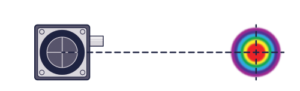
Camera-based systems offer the broadest use for beam profiling, but lack the highest resolutions, which may be required for very small beams (below 32 µm in size). If you have a low pulse-rate beam, have irregularly (non-Gaussian) shaped beams, or if you’re looking for a general purpose profiler, these are a good choice.